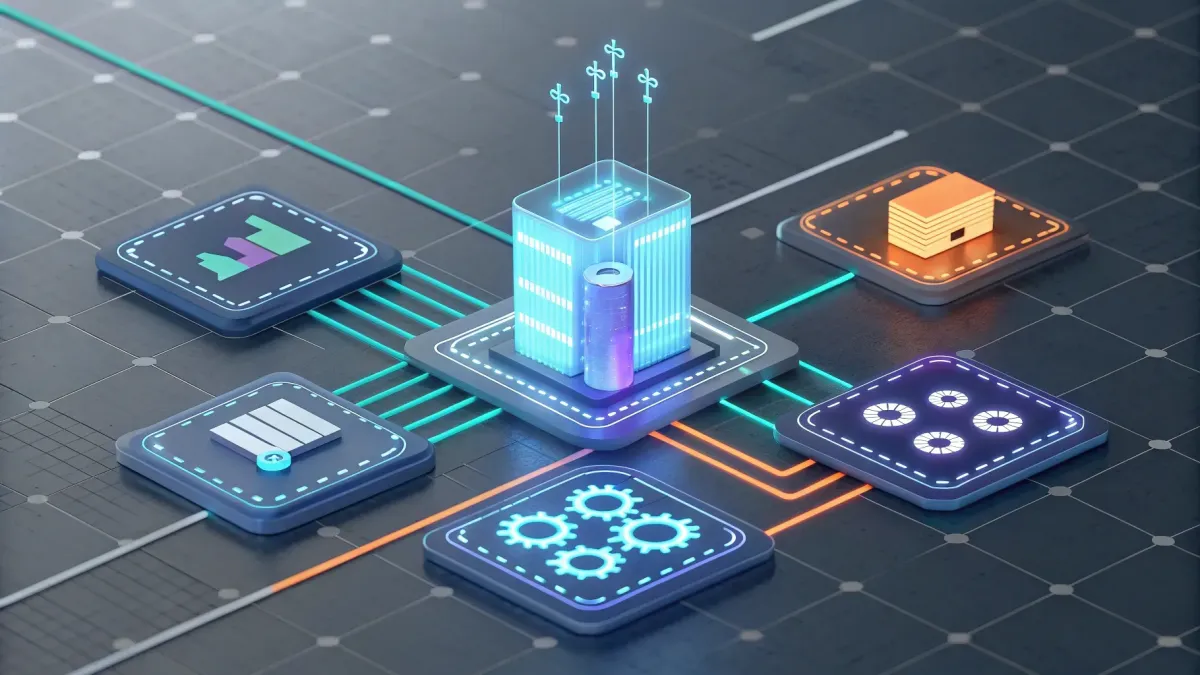
AI Marketing Automation Platform: How We Use Unified Data and Agents to Move Faster

Table of Contents
📊 Why connected data is the game changer
We believe an AI Marketing Automation Platform only becomes powerful when every data source is connected. Raw data is worthless if it sits in silos. When we link marketing, sales, service, and customer data into one place, the questions shift from "what happened" to "what can we do next."
Latency kills experimentation. If reports arrive hours or days late, we can’t run rapid tests, and opinions win over evidence. Our goal is to test data, not just opinions. That’s why we built a system that ingests everything, cleans it, and serves up trusted metrics in real time.
🤖 How agents turn dashboards into action
Data is valuable, but agents—autonomous assistants powered by AI—are the multiplier. Agents can surface insights, nudge teams, and even take actions like routing leads, sending follow-ups, or suggesting campaign tweaks.
We use agents to deliver personalized experiences and to automate repetitive work. That means our team spends less time copying data between tools and more time deciding strategy based on a single source of truth.
⚡ From meetings to pre-meeting momentum
Meetings become dramatically more effective when everyone arrives with the same trusted context. We route summarized insights into our team chat before a meeting so decisions happen in minutes, not hours. The pre-meeting becomes the new meeting because the heavy lifting was handled by data and agents earlier.
🔧 How we set up a fast, reliable foundation
The fastest path to impact is a short list of practical setup steps. Here’s our condensed checklist for calibration:
Connect data sources — marketing, CRM, support, ad platforms, and web analytics.
Define clean metrics — one definition for leads, conversions, and revenue.
Train agents — load FAQs, team playbooks, and campaign rules so agents can act reliably.
Automate routing — calls, texts, form fills, and ad leads flow to the right owner automatically.
Build dashboards — make insights visible in team channels before meetings.
Result: faster experiments, fewer missed opportunities, and consistent outcomes across campaigns.
📈 What this looks like in practice
We run unified analytics that fuel performance dashboards. Those dashboards power agent workflows that handle:
24/7 lead follow-up by AI text and voice
Smart appointment booking with calendar sync
Automated review collection and response
Ad performance suggestions and budget reallocation prompts
[Stock image: digital marketing and social media]
[Screenshot: unified dashboard showing key metrics]
[Screenshot: agent workflow sending appointment confirmations]
"You can't test opinions. You can test data."
🚀 Outcomes we chase
When we treat our AI Marketing Automation Platform as the nerve center, we unlock compounding improvements:
Speed: Decisions happen in real time.
Scale: Automation handles repetitive tasks without more hires.
Personalization: Experiences adapt to each customer using unified signals.
Trust: Teams align around one version of the truth so experiments are repeatable.
🔁 Four practical phases to implement
We roll out improvements in four connected phases so nothing breaks and everything compounds:
Install, connect, calibrate — get the plumbing right.
Establish credibility — automate responses and review collection so your brand looks active and trustworthy.
Engage ready buyers — optimize local visibility and convert intent quickly.
Amplify and scale — expand reach with paid, nurture passive audiences, and let AI run follow-ups.
❓FAQ
What is an AI Marketing Automation Platform and why do we need one?
An AI Marketing Automation Platform centralizes customer data, automates outreach, and uses intelligent agents to act on insights. We need one to eliminate silos, speed experiments, and create consistent, personalized customer journeys without hiring more staff.
How do agents improve marketing and sales workflows?
Agents surface context, route leads, automate follow-ups, and execute routine actions. That reduces latency between insight and action and allows teams to focus on high-leverage strategy instead of manual tasks.
What are the first steps to connect our systems?
Start by authenticating email and ad accounts, syncing calendars, assigning a dedicated business phone for AI handling, cleaning contact lists, and defining core pipeline stages. Then train your agents on your FAQs and policies so they act consistently.
How does this platform affect meetings and decision-making?
Insights arrive ahead of time in team channels, so meetings become decision sessions rather than discovery sessions. This shortens cycles, reduces back-and-forth, and ensures everyone operates from trusted data.
We use our AI Marketing Automation Platform (SocialBlastPRO) to turn data into action, experiments into measurable wins, and routine work into automated flows that keep momentum going. When systems are connected and agents are trained, we don’t just move faster — we move smarter.


